options-class__career-news
options-key__toggle-with-sharing
true
component-class__career-news-container-sharing
2026-06-10T12:30:00
Share
communications@dkv-mobility.com
component-separator-start_downloadContent
component-separator-end_downloadContent
component-class__career-news-container-image
How to best prepare for the transition to E-Mobility
component-class__career-news-container-text
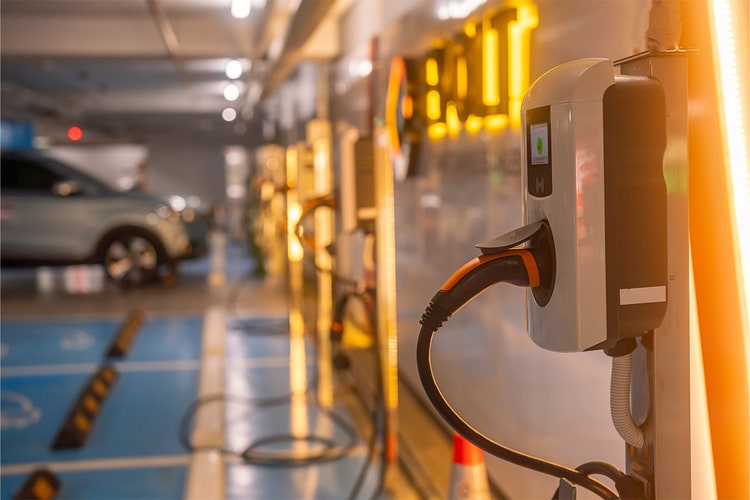
Fleet electrification involves strategic decision-making, cultural change and infrastructure development all at once. But how can companies successfully transition from fossil fuels to e-mobility in practice?
R+V Versicherung – one of Germany’s largest insurance companies and part of the Cooperative Financial Network of Volksbanken Raiffeisenbanken – began investing in its own charging infrastructure at an early stage. In an interview with our newsroom, it became clear that the journey toward an electric fleet is not a one-off project, but an ongoing process.
Hannes Davieds, Head of Mobility Management at R+V, shares his experiences and helps identify best practices for other companies. One thing should be clear from the beginning: there is no one-size-fits-all approach to fleet electrification. There is no universal blueprint that can simply be copied. Every company must focus on its own circumstances and, most importantly, on the people who will ultimately experience and shape the transition in their daily work.
The following best practices from R+V can help companies that are preparing to transform their fleets:
1. View e-mobility as a learning process, not a stand-alone project
R+V recognized early on that e-mobility is not a short-term innovation initiative, but a long-term transformation. This mindset influences planning, budgeting and internal communication. Processes and structures should be designed to scale from the beginning – both technically and organizationally.
Best practice: Treat e-mobility as a strategic initiative that requires continuous evaluation and development, rather than a completed project.
2. Plan infrastructure with the future in mind
Another key lesson learned is that future readiness requires foresight.
"Always think five steps ahead," says Hannes Davieds.
This is particularly relevant when it comes to charging capacity and technical specifications. Instead of implementing minimum requirements, companies should consider future-proof solutions, such as charging infrastructure with higher capacities. Markets, regulations and user behavior continue to evolve.
Best practice: Plan not only for current demand, but also for future growth and technological developments.
3. Build internal expertise
In the early stages, R+V relied heavily on external partners. Looking back, the company realized that internal expertise is essential for managing projects efficiently and sustainably.
"You need to be prepared for extensive consultation – and build your own knowledge within the company."
Even with careful planning, technical or regulatory uncertainties can arise. In addition, every user brings individual requirements and expectations.
Best practice: Define clear responsibilities, establish internal points of contact, build expertise and develop a clear vision for the transition.
component-separator-start_readMoreButton
cta-white-blue-border
component-separator-end_readMoreButton
options-class__career-news
options-key__toggle-with-sharing
false
component-class__career-news-container-sharing
2025-04-26T10:30:00.000Z
Share
sdkljfnsdf@asdfklmsdf.com
component-separator-start_downloadContent
component-separator-end_downloadContent
component-class__career-news-container-image

component-class__career-news-container-text
4. Actively involve employees and make e-mobility tangible
One of the key objectives of R+V’s charging infrastructure strategy was to familiarize employees with e-mobility and reduce barriers to adoption. Charging opportunities at company locations and at home significantly simplify the transition.
Today, R+V already operates more than 120 @home wallboxes. In addition, further @work charging points are planned across several company locations. In Wiesbaden, 50 @work charging points are already available, with another 22 planned. In Hamburg, the number of charging points was increased from five to ten, while the existing infrastructure in Stuttgart will be expanded from one to nine charging points.
Best practice: Make charging infrastructure available not only for company cars but also for employees’ private vehicles to increase acceptance and visibility.
5. Prioritize pragmatism over perfection
One practical piece of advice from Hannes Davieds is:
"Try things out instead of overplanning – in the end, what matters is getting started."
Of course, a solid plan is essential. However, many valuable insights only emerge during day-to-day operations. It is equally important to identify motivated employees who can drive the topic forward and act as ambassadors within the organization.
Best practice: Start with motivated teams, implement pilot projects and systematically apply lessons learned. Learning by doing should be viewed as a strategic approach.
6. Choose stable and scalable solutions
When selecting a provider, several factors were particularly important for R+V: market strength, reliability and the ability to combine fuel and charging services within one solution. Equally important were extensive network coverage, support for different charging scenarios – @home, @work and @road – as well as the integration of existing charging infrastructure.
Best practice: Invest in scalable, integrated solutions that support different charging environments and provide long-term reliability.
E-Mobility is the future – and a competitive advantage
For R+V, the decision to electrify its fleet has proven to be the right one. When asked about the significance of the transition, the answer is clear:
"Absolutely essential – this is the future. There is no way around e-mobility."
In addition to climate-related benefits and regulatory requirements, employer attractiveness is becoming an increasingly important factor. A modern and sustainable mobility strategy is turning into a competitive advantage.
R+V’s experience demonstrates that successful fleet electrification requires strategic foresight, internal expertise and a pragmatic mindset. Companies that start early, gain practical experience and build future-ready infrastructure create the foundation for sustainable mobility – today and tomorrow.
component-separator-start_readMoreButton
cta-white-blue-border
component-separator-end_readMoreButton