options-class__career-news
options-key__toggle-with-sharing
true
component-class__career-news-container-sharing
2026-05-21T11:30:00
Share
communications@dkv-mobility.com
component-separator-start_downloadContent
component-separator-end_downloadContent
component-class__career-news-container-image
DKV Mobility introduces charge card tailored for electric trucks
component-class__career-news-container-text
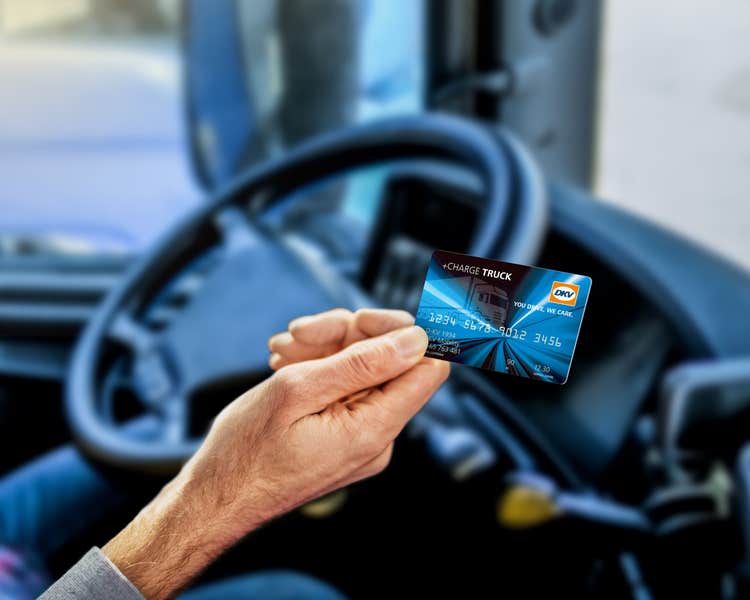
DKV Mobility is launching a charge card designed specifically for transport operators running electric commercial vehicles. The DKV Card +Charge Truck provides access to more than 3,000 verified truck-compatible charge points at competitive rates across more than 17 European countries. The card expands DKV Mobility's existing portfolio and forms part of the company's e-mobility growth strategy. The aim is to make the transition to alternative drivetrains as smooth as possible for its customers. While electrification in the passenger car and company car segment is already well advanced, it is still in its early stages in road freight – but gaining momentum: regulatory requirements, ambitious CO₂ reduction targets, and the first available series-production electric commercial vehicles are all driving the shift. At the same time, transport operators face new challenges, particularly around access to suitable charging infrastructure, route planning, and the integration of different billing and energy systems.
Sven Mehringer, Managing Director at DKV Mobility and responsible for Energy & Vehicle Services, says: "Energy management for commercial vehicles is becoming more complex – more drivetrains, more providers, more billing systems. The DKV Card +Charge Truck gives fleet operators a clear answer: one card for all drivetrains, all services, one invoice. With this, we are actively advancing our transition to a leading integrated mobility platform."
Unlike passenger cars, truck charging stations must meet significantly higher requirements: adequate clearance heights, wide access lanes, sufficient maneuvering space, and charging capacity that can handle the energy demands of heavy vehicles. DKV Mobility therefore assesses every truck charging station in its network against clearly defined minimum standards. These include a roof clearance of at least four meters, an access width of at least 2.7 meters, and sufficient space for comfortable maneuvering. Stations must also accommodate vehicles of at least nine meters in length. The bar is set high on charging capacity as well: more than 80 percent of the 3,000-plus locations offer charging speeds exceeding 300 kW.
Tim Dambor, Director Product Management eMobility Roaming at DKV Mobility, adds: "For electric truck drivers and dispatchers, reliability is what matters most. Our verified network and real-time overview in the app give both the confidence that the next station is within reach and that the vehicle can actually charge there."
At many truck-compatible locations, operators also benefit from competitive charging rates. Prices per station, charging time, and kilowatt-hours consumed are displayed transparently and in real time in the DKV Mobility App. As with all charging transactions across the DKV Mobility network, the company guarantees that every kilowatt-hour comes from 100 percent renewable energy sources. The card also provides access to additional services at selected locations, including repair, tire service, vehicle washing, and parking. If no truck-compatible charge point is available nearby, drivers can also access DKV Mobility's full charging network of around 1.2 million charge points.
The DKV Card +Charge Truck is available across Europe starting today. It is particularly well suited for transport operators navigating the transition to electric mobility: the card covers both charging for electric trucks and fueling for conventional vehicles – all through a single card and one unified invoice.
component-separator-start_readMoreButton
cta-white-blue-border
component-separator-end_readMoreButton